
The Two Negrils: West End vs 7 Mile Beach, and Why Most Visitors Only See One
You land at Sangster. You clear customs, find the rep with the clipboard, and climb onto the shuttle. For the next ninety minutes to two hours, Jamaica rolls past the window. Then the gate opens, the gate closes, somebody puts a wristband on you, and for the next seven days your whole world is one stretch of sand, one buffet and one row of loungers. On the last morning the shuttle comes back and takes you to the airport.
That is a cruise ship that doesn’t move.
We’re Jamaican, and we have spent a lot of time on both sides of Negril. We want to say something plainly: the drive is the only real Jamaica most resort guests see, and the resort is designed to make you forget it.
Negril is not one place. It is two, and they could hardly be more different. Most visitors only ever meet one of them.
The view from the bus window
Pay attention on that drive, because it is honest.
The coast road out of Montego Bay takes you through Hopewell, Lucea and Green Island. You will see zinc fences next to half-finished concrete houses, a second storey waiting on the next remittance. You will see big, beautiful homes on the hillsides above them. Fruit stands at the roadside. Children in pressed uniforms walking to school. A man selling jelly coconuts from a handcart. Goats that have no interest in your schedule.
None of that is a tragedy and none of it needs your pity. It is ordinary Jamaican life, people working, building and getting on with their day.
Then you turn in at the gate and it disappears. The lawns are clipped, the staff are in matching shirts, and nothing you see for the next week will remind you where you are. That is not an accident. It is the product.
Why so many people never leave the gate
There are three honest reasons, and we don’t dismiss any of them.
The first is fear. Most of it comes from one number. Jamaica’s murder rate has been high for a long time, and it makes headlines abroad. What the headlines leave out is how fast it is falling. Murders dropped from 1,148 in 2024 to 674 in 2025, according to the Gleaner. As of 6 October 2026 they were down another 24 percent on the same period last year, and July to September was the lowest quarter in more than three decades, the Minister of National Security told Parliament.
That number was also never a measure of a tourist’s risk. The violence is concentrated in a handful of communities and tied to organised crime. The Jamaica Constabulary Force puts the homicide rate for visitors at 2.3 per million, a fraction of what most people imagine. We go through the full numbers in Is Negril Safe? An Honest Answer.
The second is money. You paid for the wristband, so every meal outside the gate feels like paying twice.
The third is simply not knowing how anything works. Where do you go, how do you get there, what does it cost, who do you trust?
And yes, the beach vendors are real. On 7 Mile Beach you will be offered boat rides, carvings, fruit, hair braiding and things you did not ask for. It is persistent and it can wear on you. It is hassle, not danger. A polite, firm “no thanks” ends almost every conversation.
Negril One: 7 Mile Beach
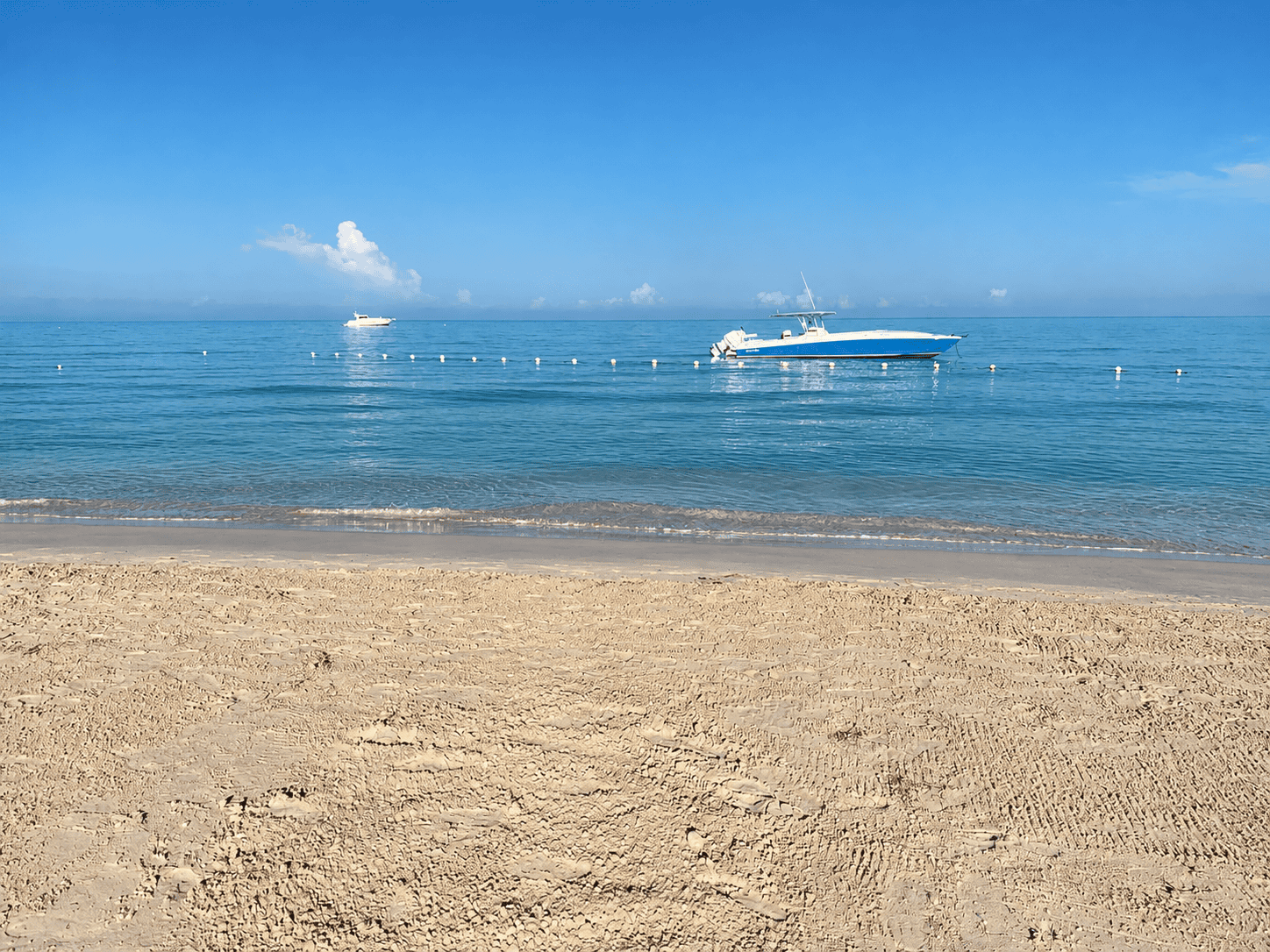
This is the Negril on the postcards. Norman Manley Boulevard runs about four miles along the sand, and you can walk the whole beach from one end to the other in 90 minutes to two hours. Do it once. Go in the morning, before the sand gets hot, and stop somewhere that isn’t your hotel for breakfast.
The beach is not the same all the way along. The north end, around Bloody Bay, is where the big all-inclusives sit, and it is quieter and more private. The middle is the heartbeat: beach bars, music, restaurants, people walking the waterline all day. The south end runs toward the river and town, busier and more local.
The water is the draw. It is shallow, calm most days and easy to swim, and you can wade in straight from the sand. If you want long walks, swimming whenever you feel like it, and dinner within walking distance, this is your side.
Where we would stay:
Idle Awhile. Right in the middle of the beach, which is exactly where you want to be. Small enough to feel personal, close enough to walk to everything. They also run a property on the cliffs, which makes it an easy split stay.
Skylark Negril Beach Resort. Beachfront, stylish, and home to Miss Lily’s. It is the sister property to Rockhouse on the cliffs, which again makes splitting your stay simple.
White Sands Negril. Unfussy, bright rooms, a pool and a beachfront bar and grill. Good value on a beach where good value is harder to find every year.
Travellers Beach Resort. A beachfront hotel on Norman Manley Boulevard with its own restaurant, for when you don’t feel like going anywhere at all.
Negril Two: The West End
Cross the roundabout and head up West End Road, and the beach ends. What you get instead are limestone cliffs, caves cut by the sea, and water so clear and deep you can see straight to the bottom from the rocks.
There is no sand here. You swim by climbing down a ladder or taking the plunge off a platform into the sea. If you are not a confident swimmer, check what each property actually offers before you book, because it varies a lot. Some have steps, some have ladders, some are mostly for looking at.
The hotels are smaller, often cottages spread through gardens, and the restaurants are built onto the rocks. It is quieter, slower and, to plenty of people who have been coming for decades, the real Negril.
Rick’s Cafe is the famous one, with the cliff divers and the sunset crowd. Go once if you want to, but go early. By late afternoon it is packed, and it is not where you go for a cheap meal or a quiet evening. The same sunset is available from almost any terrace along the cliffs, with a fraction of the people.
Where we would stay:
Rockhouse. Thatched villas on the cliffs, and probably the best-known name on this side of town for good reason. Book well ahead, because repeat guests tend to rebook before they leave.
Tensing Pen. Cottages set through tropical gardens on the cliffs, and a long-time favourite with people who come back every year. The Lodge restaurant is worth a visit even if you are staying elsewhere.
Catcha Falling Star. Small, relaxed cottages on the cliff edge. This is the West End at its most laid back.
Ocean Cliff Hotel. Right on the rocks above the water, with the sea view that is the whole point of staying on this side.
How to see both
The simplest answer is to split your stay. Spend a few nights on the cliffs and a few on the beach. People who have been coming to Negril for twenty and thirty years almost all end up doing it this way, and some properties make it easy: Rockhouse and Skylark are sister properties, and Idle Awhile has places on both sides.
Getting between the two is cheap and easy. The route taxi runs both roads for about 150 to 200 JMD (roughly $1 to $1.50 US). A charter taxi between any two points in Negril runs about 500 to 1,500 JMD, and you should agree the fare, and whether it is in Jamaican or US dollars, before you get in. Uber arrived in Negril in 2024 and is usually far cheaper than a charter, though availability late at night is less reliable. The full breakdown is in Getting Around Negril.
If you are on an all-inclusive, take one day off the wristband anyway. Walk the beach, have lunch at a jerk stand, go up to the cliffs for sunset and take a taxi back. You will remember that day long after the buffet has blurred together.
A word on day trips. Negril is not the base for Dunn’s River Falls. It is on the other side of Montego Bay, and you will spend most of your day in a vehicle. From here, look at YS Falls, the Black River, and Mayfield Falls instead. Our excursions directory lists the operators.
What leaving the gate does for Negril
Money you spend at the resort mostly stays at the resort. Money you spend at a jerk stand, a family-run guest house, a boat captain or a beach bar stays in Negril. It pays school fees, finishes that second storey and keeps small businesses open through the slow months.
That matters more now than it did. Hurricane Melissa hit western Jamaica hard in 2025, and many of the small operators who make Negril what it is are still rebuilding. Visitors who spend outside the gate are a real part of how that happens.
That is why this site exists. Every restaurant, hotel and tour operator we can find is in our directory, so you can find the places that aren’t behind a gate.
So which Negril is for you?
If you want sand, easy swimming and everything within walking distance, stay on 7 Mile Beach.
If you want quiet, clear deep water and a sunset from your own terrace, stay on the West End.
If you can, do both. And whichever side you choose, walk out of the gate at least once. The Jamaica you saw from the bus window is still out there, and it is a lot more interesting than the buffet.